
Meet the ICCM Board Members
2025-2028
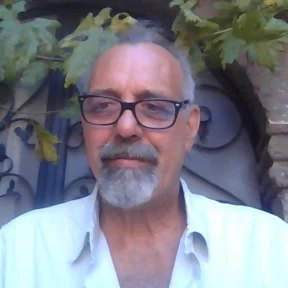
Alessandro Lugari
PresidentAlessandro Lugari began his activity in 1987 with Studio Cassio, a workshop that has been active in the capital since 1800. He designs and implements numerous works for public and private clients. He received a degree in Technologies for conservation of cultural heritage at University of Tuscia in Viterbo, a degree in Conservation of mosaics at ‘School of conservation of Mosaics’ in Ravenna and a degree in Archaeology at University of Molise. Conservator specialized on ancient mosaics and sectilia with over 35 years of experience. In 2001 starts to worked like a conservator at Opificio delle Pietre Dure in Florence. In the last 25 years, he works in Soprintendenza Speciale per il Colosseo, il Museo Nazionale Romano e l’Area Archeologica di Roma, where he directs several conservation projects about mosaics, stones and sectilia. He is a founding partner of AISCOM (Italian association of study and conservation of ancient mosaics) in which is a member of the board. He is also a member of board of ICCM (international committee of conservation of mosaics). He is the foundator of Pictor Imaginarius Association with which he organizes in the last fifteen years an international prize of contemporary mosaic, in Nazzano, a little village at north of Rome. He is specialized on construction methodology of ancient mosaics and he wrote several papers about the argument. He teaches conservation of stones and mosaics at Central Restoration Institute in Rome and he teaches ‘Organization of construction sites for restauration’ at University of Rome ‘La Sapienza’ department of architecture. He is a consultant in several international project of conservation in archaeological sites (Turkey, Israel, Palestine, Greece, North Makedonia, Bulgaria, Spain, Portugal, GB,..). Actually he is a phd student at University of Tuscia (Viterbo).
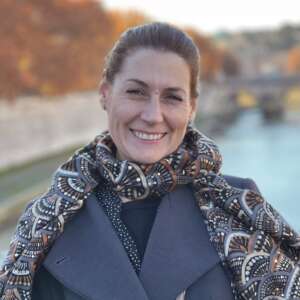
Maja Franković
Vice-PresidentMaja Franković graduated in stone conservation–restoration from the Academy for Arts and Conservation of the Serbian Orthodox Church in Belgrade (2002) and obtained her postgraduate degree in conservation from the Faculty of Applied Arts, University of Belgrade (2009), with a master’s thesis focused on the conservation of dislocated mosaics. She completed her doctoral studies at the Faculty of Mining and Geology, University of Belgrade, specializing in the decay mechanisms of porous building materials and stone consolidation. She specialized in mosaic conservation through internships at the Musée départemental de l’Arles antique (2002, 2004). She also participated in professional training in stone conservation organized by the Istituto Superiore per la Conservazione ed il Restauro (Belgrade, 2011), as well as the ICCROM International Course on Stone Conservation (2013). Between 2004 and 2007, she took part in ICCROM Courses on Archaeological Conservation for Southeast Europe and acted as an assistant lecturer during the Butrint course in 2007. Since 2005, she has been professionally engaged in mosaic and stone conservation. She worked as a conservator at the National Museum of Serbia, and from 2009 to 2021 at the Central Institute for Conservation in Belgrade, where she headed the Centre for Conservation–Restoration from 2015 to 2021. Since 2021, she has continued her work at the National Museum of Serbia as Conservator Counsellor, leading mosaic conservation projects. Her professional experience includes more than 25 conservation projects in museums and archaeological sites in Serbia and the wider region, including mosaics from the UNESCO World Heritage Site Gamzigrad–Felix Romuliana, Villa Urbana in Budva (Montenegro), and Skelani (Bosnia and Herzegovina), as well as stone conservation projects in numerous Serbian museums. She has also served as a consultant to the Cultural Heritage Preservation Institute of Belgrade on conservation works at the Belgrade Fortress. Her research and professional practice focus on sustainable conservation approaches that safeguard the authenticity of cultural heritage, combining hands-on conservation, multidisciplinary research, capacity building, and education. She has published scientific and professional papers and has participated in numerous international conferences. She is a co-founder of the SEE Mosaics Project, a regional platform dedicated to documentation, conservation, and professional networking in Southeast Europe. She has been an active member of ICOM since 2003, ICOMOS since 2023, and the ICCM since 2002, where she currently serves as Vice-President of the Board.
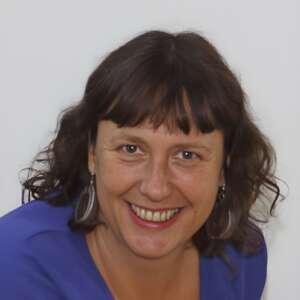
Ioanna Ruiz de Torres Moustaka
SecretaryIoanna holds a Bachelor’s Degree in Conservation and Restoration of Cultural Heritage (1999), with a specialization in archaeological heritage, as well as a Master’s Degree in Cultural Heritage Management (2012). Her academic background is complemented by continuous professional development through specialized training courses in areas such as heritage interpretation, visitor management in archaeological sites, and risk management in built heritage. She has over twenty-five years of professional experience as a conservator-restorer. During this period, she initially collaborated with several companies in the sector and subsequently founded and managed her own company. She assumed technical responsibility for numerous conservation and restoration projects, most of them carried out at archaeological sites, including the coordination and technical direction of interventions. Since 2018, she has been working as a stone and mosaic conservator-restorer at the Ministry of Culture of Spain. In this role, her professional activity has focused on the drafting, coordination, and technical direction of cultural heritage intervention projects. In addition, she has contributed to the preparation of key strategic and methodological documents at a national level, including the National Archaeology Plan and the Coremans Project: Intervention Criteria for Stone Materials. Her professional engagement also extends to institutional and professional representation. She served as a member of the Board of Directors of the Spanish Association of Conservators-Restorers between 2020 and 2024, and she was a member of the E.C.C.O. Committee during the 2023–2024 period, contributing to discussions and initiatives at a European professional level. Her commitment to the dissemination of knowledge, best practices in the field and the advancement of the discipline is reflected in various publications, conference presentations, and the organization of seminars, including two developed in collaboration with ICCROM in 2023 and 2024, focused on the conservation and management of archaeological sites. She is fluent in Spanish, English, and Greek, both spoken and written, enabling effective collaboration in international and multidisciplinary contexts.
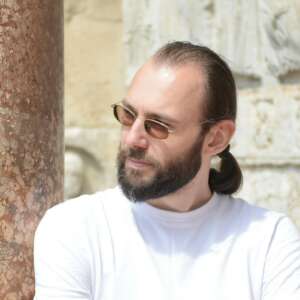
Nikifor Haralampiev
TreasurerNikifor Haralampiev received a degree in wall painting conservation from the National Academy of Art, Sofia in 2006. He was an intern at the Conservation Lab of the Ivan Duichev Center for Slavo Byzantine Studies (2006-08) and at the Science Department of the Getty Conservation Institute (2010-11). In 2013 completed his PhD in technical art history at Sofia University “St. Climent Ohridski”. Since 2014 Nikifor has been teaching Architectural Surfaces Conservation and Conservation Documentation at the National Academy of Art, Sofia. He led the research and conservation of the 20th century murals in the vault of the St. Demetrius church in Sofia, and the revealing of the 16th c. wall paintings in the altar of the church in the Kurilo Monastery, Bulgaria. Since 2020 he has been working on the conservation of the mosaics in the Buzludzha Monument as part of the Buzludzha Project Foundation’s Mosaics Conservation Team.
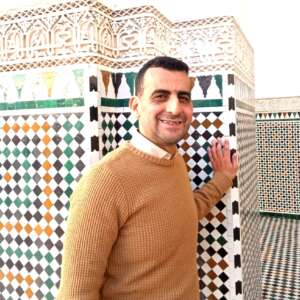
Mustapha Atki
MemberAs a university Professor-Researcher specializing in archeology and cultural heritage, Mustapha Atki teaches at the faculty of arts and Humanities, Ain Chock, Hassan 2 University, Casa Blanca. Mustapha Atki was previously Curator of the archaeological site of Volubilis for 8 years. Thanks to his efforts and those of the Directorate of Cultural Heritage, the site hosted the training program for the restoration of mosaics (MOSAIKON). He succeeded in leading renovation works at the Volubilis Interpretation Center, which is today the largest interpretation center for archaeological sites in Morocco. Mustapha Atki had worked at the Archaeological Museum in Rabat where he documented hundreds of archaeological objects between 2007 and 2011. Between 2003 and 2007, he was delegate of the Ministry of Culture in Tata in Morocco. Among his achievements, an inventory of the cultural heritage of the province of Tata with two other colleagues. In 2024, thanks to the support of The Kavelman Group, he launched with other experts a national organization called the Moroccan Association of Natural and Cultural Heritage (MANCH). Through this organization, he intends to participate in the protection and promotion of all aspects of culture and nature in Morocco with local and foreign partners. He graduated with a doctorate from Mohamed 5 University in Rabat, Morocco and a graduate degree from the National Institute of Archaeological and Heritage Sciences in Rabat. His academic work focuses on the study of cultural heritage in general and archaeological sites in particular.
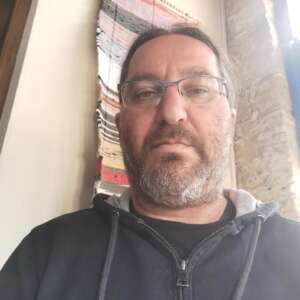
Eleftherios Charalambous
MemberDr. Eleftherios Charalambous studied History – Ethnology and Conservation of Antiquities at the Democritus University of Thrace. In 2006 he obtained a Master’s Degree and in 2009 a PhD both from the Polytechnic School of the Aristotle University of Thessaloniki in the Interdepartmental program “Conservation and Restoration of Works of Art and Mechanisms”. His published PhD thesis refers to the “Study of the manufacturing technology and identification of workshops of Cypriot floor mosaics, 2nd-7th century AD using chemical and physicochemical methods”. Since 2001 he has been working at the Department of Antiquities of Cyprus in the field of mosaic conservation. He has participated in local and international conferences and given lectures in Cyprus and Greece. He has also participated in funded research programs and the organization of exhibitions. He is a member of various scientific societies and the author of many scientific articles published in scientific journals such as the Journal of Thermal Analysis and Calorimetry, the Journal of Archaeological Science: Reports, the Heritage and the Annual Report of the Department of Antiquities. His research interests include the use and properties of archaeological materials, the manufacturing techniques and technologies with an emphasis on the mosaic floors, as well as conservation methods and materials.
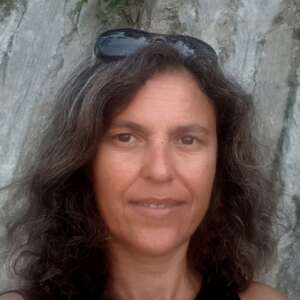
Stefania Chlouveraki
MemberStefania Chlouveraki received a BSc in Archaeological Conservation from the University of West Attica, Greece, (former T.E.I. of Athens) and her PhD from the Institute of Archaeology, University College London. She has been teaching mosaic conservation at the Department of Antiquities and Works of Art Conservation, University of West Attica, since 2006. From 1997 until 2014 she was the Head Conservator of the W.D.E Coulson Conservation Lab at the INSTAP Study Centre for East Crete and directed several object and site conservation programs. Since 1993 she has organized and directed the mosaic and building conservation/training projects of the European Center for Byzantine and Post Byzantine Monuments in Jordan and Syria. In 2014-2015 she coordinated the INSTAP-KAPLAN program on the development of 'Conservation Master Plans for Sites with Rubble/Earthen Architecture in Greece', including field applications and training seminars. From 2015, until today she has expanded her research to the study of Byzantine mosaic icons. Her professional and research interests include the documentation, remedial and preventive conservation of architectural remains, focusing mainly on in-situ mosaics and rubble/earth architecture, the recovery of mosaics from past conservation treatments, and the development of light-weight systems for mounting detached mosaics and the study of the technology and pathology of mosaic panel icons. She is a Founding Member of the Hellenic Society for Near Eastern Studies (HSNES) and is a member of the Directory Board of ICCM since 2008 and its Vice President since 2014.
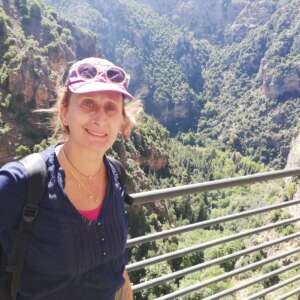
Samar Karam
MemberSamar Karam is the Head of Archaeological and Historical Sites in North Lebanon at the Directorate General of Antiquities-Ministry of Culture. She holds a BA and an MA in Art and Archaeology from the Lebanese University. Samar began her career as an archaeologist in Beirut, participating in urban excavations after the civil war. In 1996, she joined the Directorate General of Antiquities-Ministry of Culture and was appointed as an archaeologist in charge of the world heritage site of Byblos. She managed the archaeological site, controlled projects in the historical city, coordinated UNESCO delegations, reorganized abandoned archaeological storages since 1975, and contributed to the creation of the site museum of Byblos in 2001. In 2000, she was promoted to be in charge of North Lebanon's bigger area, which includes several archaeological sites and historical cities. She participated in the rehabilitation and presentation of different sites, including Tripoli castle, its two museums, Hammam Ezzedine in Tripoli, Monuments in the World Heritage Site of the Holy Valley (Qadisha Valley), and the revival of the historical city of Al Mina. Samar is the focal point for the world heritage sites of Lebanon, updated the tentative list of Lebanon, and has a key role in periodic reporting for the 5 Lebanese sites on the World Heritage list, specifically the Holy Valley and the Cedars Forest. Since 2010, she has been trained within the Mosaikon program, where she gained knowledge in conservation and restoration methods and approaches, as well as the management of archaeological sites with mosaics. Currently, she is a member of the Mosaic Management Unit in Lebanon and the co-coordinator of the Mosaic Conservation Course in Lebanon. She is a member of the committee for the management of the National Museum of Beirut and ICOM Lebanon.
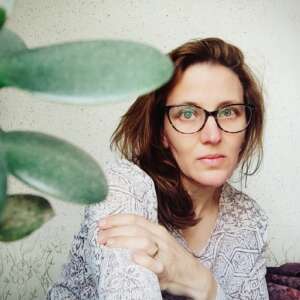
Brigitta Maria Kürtösi
MemberBrigitta Maria Kürtösi graduated as a painting conservator (MA) and completed her doctoral studies (DLA) in Archaeometry of Roman and Medieval excavated mosaic finds at the Hungarian University of Fine Arts in Budapest. She has been active in the field of mosaic conservation and restoration for over 25 years. She is an Associate Professor at the Hungarian University of Fine Arts and also teaches at Pázmány Péter Catholic University (PPCU) within the Doctoral School of History, where she is involved in the education of international PhD students. She works closely with doctoral researchers from Syria on topics related to archaeological mosaic heritage. In her teaching and professional practice, she covers both theory and hands-on training in mural paintings and mosaics, including material analysis of mortars, stone, and glass. She is a member of the Hungarian Archaeological Mission in Egypt and participates in the South Khokha Project as a conservator and researcher of wall paintings. Her professional vision focuses on sensitizing younger generations to conservation and research in mural and mosaic heritage, while highlighting the importance of international and multidisciplinary cooperation. In addition to her academic work, she maintains a private conservation and art practice. She is actively involved in the study and research of modern mosaic heritage, with a particular focus on Art Nouveau mosaics in Central Europe. This interest led her, representing the Hungarian University of Fine Arts in Budapest, to initiate and lead the organization of the 6th SEE Mosaics Meeting, titled “Mosaics from the 1900s: Modern Materials, New Problems in Focus,” within the regional SEE Mosaics project. In addition to her involvement with ICCM, she is a member of several international professional organizations, including AIEMA and AIHV. Since 2025, she has served as Vice President of the Association of Hungarian Restorers.
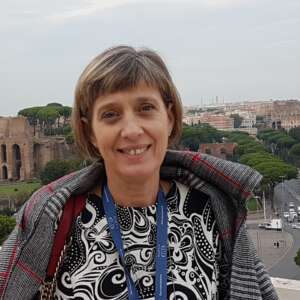
Maria Merzani
MemberMaria Mertzani received a BSc Honors in Archaeological Conservation from the Institute of Archaeology in London (UCL). In 2002, she took her Postgraduate Specialization Diploma (MSc) from Metsovio National Technical University in Protection of Monuments, Complexes and Sites, specializing in Materials and Interventions. From 1998, she worked as a laboratory instructor in the Department of Conservation of Antiquities and Works of Art, Technological Educational Institute of Athens where she participated in research programs and supervised several dissertations. In 2005 she became a permanent conservator at the Hellenic Ministry of Culture and Sports. She worked at Thessaloniki Archaeological Museum, the 3rd Ephorate of Prehistoric and Classical Antiquities and finally the Directorate of Conservation of Ancient and Modern Monuments. In 2014 she was appointed the Head of the Directorate. The mission of the Directorate is the development of national strategies and policies for the conservation of cultural heritage, as well as the implementation of large scale, challenging conservation projects.
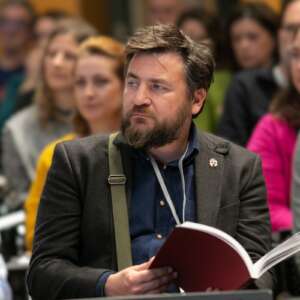
Toni Šaina
MemberToni Šaina graduated in 2007 from the Department of Conservation-Restoration at the Academy of Arts, University of Split, specializing in wall paintings and mosaics. In the same year, he began working at the Croatian Conservation Institute. He is part of the Department for Wall Painting and Mosaics, located in Rijeka. He actively participates in and leads numerous conservation-restoration programs and research projects on mosaics, including the mosaics found in the Euphrasian Basilica in Poreč, which is part of the UNESCO World Heritage List. He presents his research findings and restoration projects at scientific and professional conferences both in Croatia and internationally, and has played an active role in organizing several international professional meetings. He is the author and co-author of multiple professional and scientific papers. Currently, he is a doctoral candidate at the University of Ljubljana, where he is investigating methods of conservation-restoration interventions on ancient and late antique mosaics in Pula. Since 2011, he has been a regular collaborator on the SEE Mosaics project—a platform for collecting data on mosaics in Southeast Europe. Since 2022, he has served as a member of the management board of HRD (Croatian Society for Conservation-Restoration) and as a member of ICCM (International Committee for the Conservation of Mosaics).
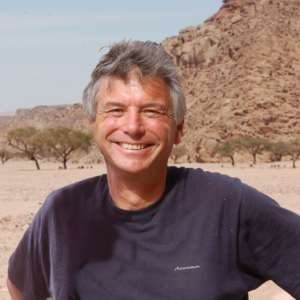
Roberto Nardi
Honorary President / Ex Officio MemberRoberto Nardi received a degree in archaeology from the University of Rome and in conservation of archaeological materials at the Central Restoration Institute, Rome. In 1982 he founded the Centro di Conservazione Archeologica (CCA), a private company carrying out public commissions in the field of conservation of ancient monuments and archaeological sites. CCA is based in a convent located north of Rome where training course are held. He has directed more than 50 projects or training courses in 14 countries, including the Arch of Septimius Severus and the Temple of Vespasian in the Roman Forum, the ancient Roman town of Zeugma, Turkey, wall paintings at the Madrasa Amiriya in Yemen, and the mosaic at Saint Catherine’s in the Sinai. Since the mid-1980s, he has made a special effort to raise awareness on the themes of fragility and safeguard of cultural heritage by opening CCA’s conservation worksites to the public in places such as the Capitoline Museum in Rome and Masada in Israel. He has developed projects for the Getty Conservation Institute and the Packard Humanities Institute, with special reference to mosaics conservation. He has published 80 technical articles and was the Kress Lecturer at the American Institute of Archaeology for 2010/2011. He has been a member of ICCM since 1983, its Vice-President since 1989 and the President since 2014.
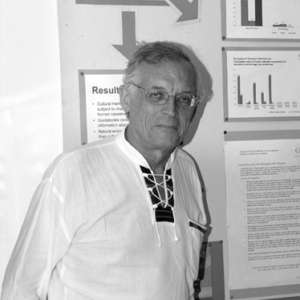
Gaël de Guichen
Honorary / Ex Officio MemberGaël de Guichen is a french chemical engineer. He used to be in charge of the conservation of the prehistoric Cave of Lascaux in France. Later, in 1969, he joined ICCROM . In 1977, he organized the first conference on Mosaic Conservation, which gave birth to the ICCM. For 9 years he was its Secretary. In 1999, he was nominated Honorary President. He stayed for his entire career at ICCROM actively developing programmes on Preventive Conservation for the 135 member countries and since 2007 proposing the wordwide program for reorganizing the storages in museums (RE-org) He is now advisor of the Director general of ICCROM.
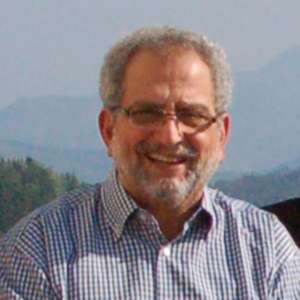
Demetrios Michaelides
President Emeritus / Ex Officio MemberDemetrios Michaelides (President Emeritus) is Professor of Classical Archaeology at the University of Cyprus. He completed his undergraduate studies at the Courtauld Institute, University of London (B.A. in History of European Art) and his graduate studies at the Institute of Archaeology, University of London (M.A. in Archaeology of the Roman Provinces; Ph.D. “The Pavements of Roman Benghazi, Libya”). He has taught at the Università per gli Stranieri of Perugia in Italy and worked under various guises at the British School at Rome (Assistant Director, Cultural Adviser, and Assistant Librarian). In 1982 he returned to Cyprus and worked at the Department of Antiquities as Archaeological Officer for the District of Paphos. He was appointed Associate Professor at the University of Cyprus in 1992 and Professor in 2000. He was the first Head of the Department of History and Archaeology (1996-2000), and he is presently Director of the Archaeological Research Unit of the University. He has published widely on Cypriot and Mediterranean Archaeology, and is on the Scientific Board of several archaeological periodicals and encyclopedias. He was instrumental in organizing several workshops (in collaboration with the Getty Conservation Institute) dealing, mainly, with the conservation of mosaics. During 1994-2004, he was Vice-President of AIEMA (Association Internationale pour l'Etude de la Mosaïque Antique) and is presently a member of the Administrative Council. He has been a member of the Board of ICCM since 1990 and its president since 1996.
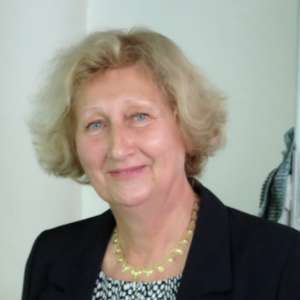
Anne-Marie Guimier-Sorbets
Honorary / Ex Officio Member - AIEMA RepresentativeAnne-Marie Guimier-Sorbets (AIEMA Representative) est professeur émérite d’archéologie et d’histoire de l’art du monde grec à l’Université de Paris Nanterre. Elle fait partie de l’équipe Archéologie du monde grec et systèmes d’Information au sein de l’Unité Mixte de Recherche « Archéologies et Sciences de l’Antiquité » (Centre National de la Recherche Scientifique, Université de Paris I, Université de Paris X, Ministère de la Culture), dans la Maison René Ginouvès, sur le campus de Nanterre. Elle consacre ses recherches à l’architecture et au décor architectural (mosaïque, peinture, stuc) dans le monde grec jusqu’à l’époque impériale. Elle travaille notamment sur la Grèce du Nord et sur l’Egypte gréco-romaine. Pour la mosaïque, ses publications et travaux en cours concernent principalement les techniques et l’iconographie des pavements à l’époque hellénistique et le début de l’époque impériale ; elle est chargée de la publication des mosaïques et des peintures d’Alexandrie découvertes par le Centre d’Etudes Alexandrines (directeur J.-Y. Empereur) et collabore avec le Service des Antiquités de l’Egypte et le Musée gréco-romain d’Alexandrie. Présidente de l’Association Internationale d’Etude de la Mosaïque antique (AIEMA), elle représente cette association au sein du bureau de l’ICCM.
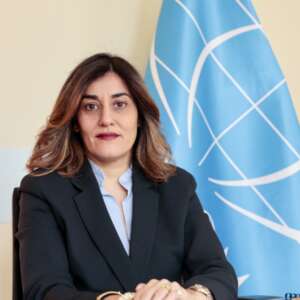
Aruna Francesca Maria Gujral
Director-General of ICCROMMs Gujral is an accomplished, dynamic, innovative and committed thought leader with more than 20 years of experience in the public and international development sectors whose extensive background and vast experience in complex programme development and management, strategic planning and programming, governance and policy, coupled with remarkable expertise in mobilizing funds and forging multi-stakeholder partnerships, position her as a guiding force for the Organization. She is, an Italo-Indian with an outstanding multicultural and multilingual background, previously worked for over 18 years at the Food and Agriculture Organization of the United Nations (FAO), where she held several leading roles in multiple countries and regions, and served in several duty stations at the country, sub-regional, regional, and HQ levels. In her previous role as Adviser on Strategy and Policy Coherence at the UN Food Systems Coordination Hub in FAO HQ, Ms Gujral provided strategic advice to enhance policy integration and acceleration of the Sustainable Development Goals (SDGs) and the 2030 Agenda. As Special Adviser to the Deputy Director-General at FAO, she played a key role in transforming the Organization's business model, propelling policy and operational changes, establishing a programmatic approach for greater impact, fostering key partnerships and strategically positioning FAO within the UN Development System Reform. In addition, Ms. Gujral's varied career at FAO includes roles such as Strategy and Planning Officer at FAO HQ in Rome, Italy, Programme Development and Resource Mobilization Officer in Cairo, Egypt for the entire NENA Region, Head of the Policy, Planning and Programming Unit in Mogadishu, Somalia and Programme Coordination Officer in Accra, Ghana for the entire Africa Region. This history showcases her ability to successfully align national strategies with effective programmes and nurture decisive partnerships with various stakeholders, including, Governments, Donors, UN Agencies, NGOs, IFIs, and Private Sector partners. She was stationed in various countries, including Jordan, Sudan, the United Arab Emirates, Kenya, and the Central Africa Republic, which highlights a remarkable ability not only in conceiving cross-sectorial policies and programmes, mainstreaming results-based strategic planning and providing technical assistance on the ground, but also in leading and managing complex programmes and operations, mobilizing significant resources and effectively contributing to policy cohesion and accelerating sustainable transformations through programmatic and systemic-thinking methods. Ms Gujral's earlier career includes roles such as Policy Advisor and Project Analyst for the Society for International Development (SID), Multilateral Cooperation Specialist for the Italian Ministry of Foreign Affairs and International Cooperation, Project Manager and Microcredit Specialist for the Friuli Venezia Giulia Region, Assistant Professor in International Cooperation at the University of Trieste, Italy and Institutional Relations Specialist and Exhibitions Curator at the Italian Institute of Culture in Paris, France. Ms Gujral is truly passionate about and fully committed to accelerating progress through participatory and systems-thinking approaches and propelling well-being, social cohesion, inclusivity, and economic growth for better lives and livelihoods, particularly for youth and women.